Build strength, balance, and confidence with this powerful sit to stand movement tailored to stroke victims
This month’s Stretch of the Month is the Sit to Stand with Touch Tuina co-founder Errol Lynch. Leaning more towards movement, Errol demonstrates this exercise for stroke victims, however it can also be utilised by anyone, specifically those struggling with back, hip or postural problems. It’s also great for strengthening the legs!
How To Do the Sit to Stand Exercise
Preparing Your Stance
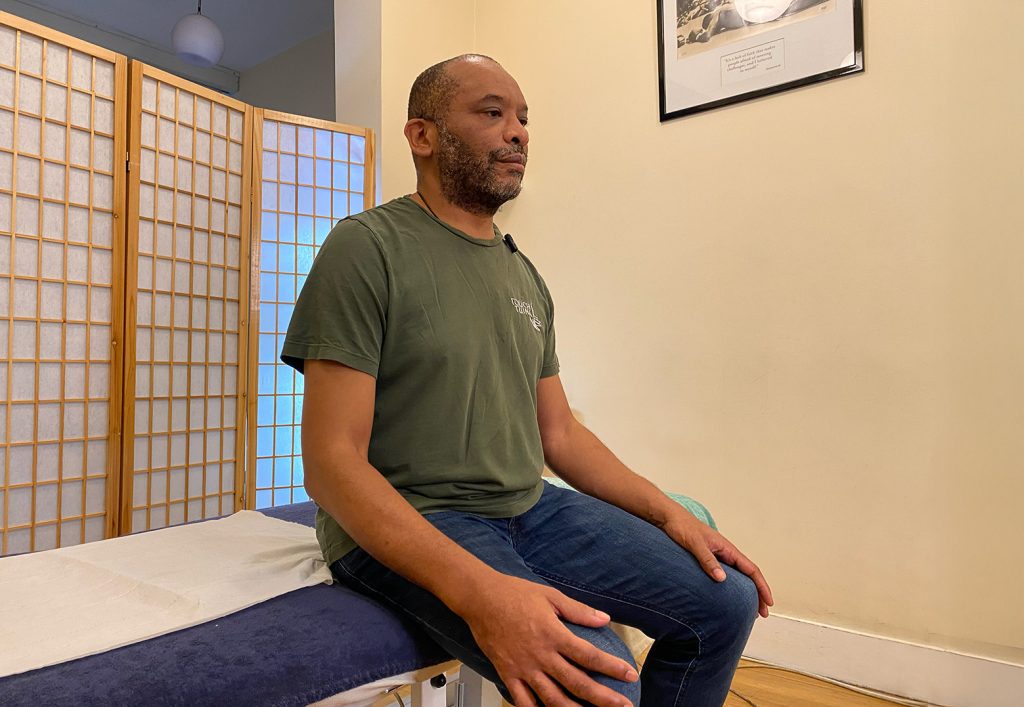
Start by sitting on a bed, a sturdy chair or a bench.
Place your feet hip-width apart and ensure your weight is evenly distributed through both legs. This is especially important, as people can favour one side.
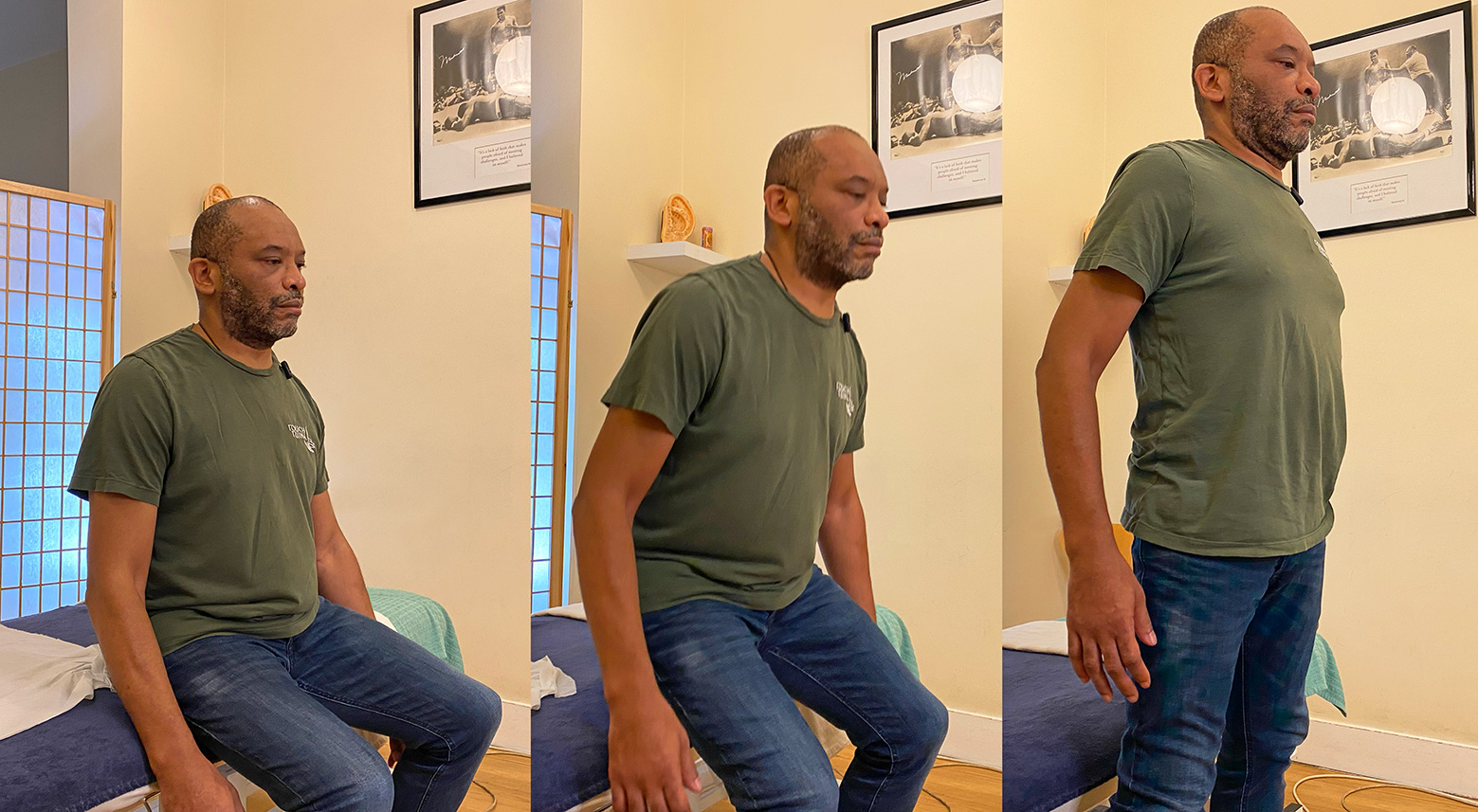
Begin by lifting yourself just slightly, as if you’re about to stand up. Focus on moving with control rather than speed. You should also focus on remaining fully in control at both the start and the end of the movement.
Pause very briefly, then gently return to sitting
Repeat this motion several times. Once you’re comfortable sitting up and down at this range of motion, continue to carry out the movement but take it to the next level by lifting up slightly higher. Again, once you’re comfortable at this next level, do the same and increase the height of which you stand.
At each level, repeat the movement several times to train your muscles how to behave, until you reach the final level. The final level means lifting yourself to a full standing position.
Things To Remember
When doing the sit to stand exercise for stroke victims, it’s important to:
Move slowly and deliberately – stand up and lower down with control until it feels comfortable
Avoid dropping quickly as the goal is to control the muscles throughout the movement
Avoid putting uneven weight on one side. Tthis helps prevent over-dominance of the stronger leg and ensures the weaker side benefits from the exercise
Repeat each level multiple times to get used to the movement
Use both hands to support you when first trying the exercise by placing them beside you on the surface on which you’re sitting
Use your hands if a particular level is more difficult for you – for example, you may not need your hands for the first range of motion, but you may need them when trying to fully stand up
Gradually work toward standing up and lowering down with minimal hand support
Why This Is an Effective Exercise for Stroke Victims
This exercise for stroke victims supports recovery by building strength in both legs. This improves balance and postural control, encouraging (symmetrical) movement, training muscles to work their full range, and increasing confidence with everyday movements like sitting and standing
If you’re recovering from a stroke, try this Stretch of the Month today. For more exercises for stroke victims, be sure to keep an eye out on our social media and blog pages, as Errol continues to share things that have benefited himself and his patients.
If you’d like to see more stretches and exercises designed to support general mobility, follow us on Instagram and TikTok, and don’t forget to save them for later! For more Stretches of the Month, just take a look at our Blog page!